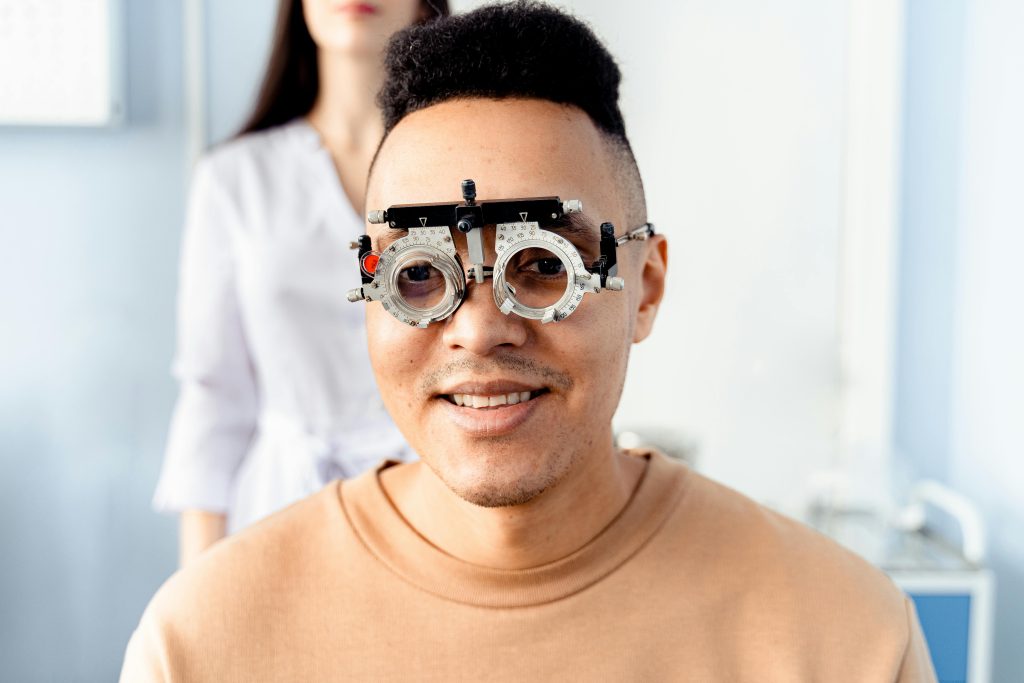
In the first part of our series, we introduced a Watch Your Windows approach for household myopia management that conceived timing as the frame, Window 1 as the outdoors, Window 2 as the home & neighbourhood, and Window 3 as learning spaces & styles.
This article covers the ‘window frame’ of at-risk age groups and importance of timing for reducing some environmental risks of myopia development and progression.
It takes time to grow up and along the way, our eyes are fine-tuned by the environment. Aside from prenatal conditions (See BOX 1) 1 which can affect many aspects of gene expression and physical growth, there are critical periods for post-natal development of the eyes, much of it occurring in the first year after birth 2 with slow refinement until adulthood.
BOX 1
Prenatal Factors in Myopia Development
Preterm babies often have issues with their eyes, as they were born too early to complete the delicate process of ocular development in the womb. Retinal pathologies and refractive errors are associated with preterm births, but the myopia mechanisms seem to differ from those born at-term (Zha et al., 2017).
Late pregnancy arsenic exposures in the absence of sufficient Vitamin D are associated with myopic children (Tong et al., 2025), as is maternal hypertensive disorder of pregnancy (Li et al., 2023). Seow et al. (2019) in a study on Singaporean neonates found altered DNA methylation patterns from umbilical cord samples of children that later developed myopia, linking this to epigenetic change from in utero environmental factors, suggesting influence of the mother’s pollution and light exposure. However, by the third trimester it is believed that fetuses can also perceive and respond to environmental light stimuli.
Due effects on DNA methylation, Williams et al. (2019) found maternal grandmothers that smoked during their pregnancy lowered their grandsons and granddaughters risk of being myopic by age 7. (That being said, smoking increases direct offspring risks of myopia (Huo et al., 2021) and is the main culprit for later life macular degeneration. Don’t do that.)
In UK Biobank data, later maternal reproductive ages in the absence of sufficient outdoor activity (are you noticing a pattern yet?) was found to elevate myopia risk of children (Qi et al., 2025). Birth seasons have been (unreliably) associated with offspring refractive error (Ma et al., 2014; Huo et al., 2021), with birth month recently re-interpreted as an education factor (Brennan et al., 2025).
A rat study (Faryadian & Khosravi, 2015) even found changes to neurotransmitter profiles of adult offspring based on their pregnant mother’s light colour exposures. This mainly affected the GABA and dopamine systems and therefore offspring mood and behaviour. Possible influence of spectral factors in myopia will be covered in Window 2: Home & Neighbourhood
We have decades worth of potential vulnerabilities to myopia, from prenatal to adult environments, but it seems that some temporal (time, age) windows may be more impactful.
In terms of myopia onset there are two loose categories: School (early childhood or juvenile) and Adult. They are not mutually exclusive, but differ in prevalence by ethnicity and context. Childhood onset myopia linked to factors such as genes, culture, and education style is the main challenge for contemporary East Asian and Singaporean families as well as public healthcare.
BOX 2
Window 3: Learning Spaces & Style
Goldschmidt & Jacobsen (2014) describe how in a critical reading of the literature, early onset myopia is a product of near work + a specific learning process. Prevalence in children around the world has been strongly determined by changes in national and local academic systems, particularly where the school environment starts to dominate childhood hours, minds, and vision.
They quote an ophthalmic surgeon, writing for the American Journal of Medical Sciences in the 19th Century: “Hypermetropia is the prevailing condition of the refraction of . . . eyes uninjured by the educational process.” Dr. Randall in his research compilation notes that only in advanced classes, and more so in German schools, does myopia onset begin during early school years.
Even in 1885, widespread public education, artificial illumination, and ‘methods and instruments of precision’ resulted in a notable upswing of childhood myopia prevalence. Recreational reading was the iPad of their times.
Basically we’ve been at this in some form or another for 140 years.
Thus far the literature indicates that lifestyle before age 12 and especially before 7 years old is highly impactful for onset, speed of progression, and therefore adult severity of myopia. Hu et al. (2020) represent the data well in their Figure 4 3. You can think of this early-age-window framework as the opportunity to train young eyes. At this age, certain aspects of our visual system seem to be tuned to shape themselves according to the world in an effort to function more efficiently and effectively as an adult.
Lots of near work and academic pressure – specifically studying formats that involve intense focus, lots of reading, writing, and memorisation – in childhood and adolescence is correlated with myopic eye development at earlier ages. However, experts have come to realise that it is not enough to reduce near work.
Risk Awareness for the Temporal Window:
Investing in Myopia Management at Early Ages as a Family
It is worth investing in a little extra eyecare and effort at younger ages to reduce risks for and quickly detect onset of myopia. This could be done at the household level, cultivating beneficial family habits and visual environments in and beyond the home base.
This is difficult in East Asian cultures (See Y. Liu et al. 2022)4 where schooling is highly competitive, and can start in children as young as 2 years old. Experts think this factor may partially explain why those populations have 7x the myopia prevalence of Africa, where school-proper starts at age 6 or later (Roxby, 2024)5. The rates of myopia in different ethnic groups of neighbouring Malaysia has been typically lower than that of Singaporean cohorts, likely a byproduct of national education as well as culture (Saw et al., 2006)6.
According to data from a Chinese study (tabled below), figuring out how to delay myopia onset by a few years could make a substantial difference to myopia rates and severity in the future adult population. In Singapore, it is no longer uncommon for children to show myopia onset in their eye checkups at the age of 5 and a half or even earlier, at which point an eyecare practitioner may recommend interventions to slow progression. Note that some therapeutics may differ in their impact potential at different ages and amongst ethnic groups,7 possibly indicating multiple mechanisms involved for this age window.
Hu et al. (2020)
| 7 – 8 years old | 9 years old | 10 years old | 12 years old | Age of Onset |
|---|---|---|---|---|
|
>50% |
30% |
20%
|
<5% |
Risk of developing high myopia |
Sadly, we have not figured out how to speak fluent retinal or brain cell, so we can’t tell growing eyeballs that regardless of what the stack of homework, dense urban landscapes, enclosed spaces, or abundance of tiny close-up screens may imply about the future, remaining emmetropic instead of developing myopically is really for the best. Perhaps in a decade or less neuroengineering will assist.
In the meantime: We must understand the risks and manage myopia, particularly at early ages, to delay onset and slow progression. Besides going for regular checkups and making suitable myopia management choices supervised by a primary eyecare specialist, this could be supported through curating visual environments and cultivating good lifestyle habits for young children.
This is about more than simply correcting blurry vision. Mitigating eyeball elongation seen in myopia progression is necessary to protect ocular tissues and lifelong vision from myopia-linked diseases like dry eye (DED, Zuo et al. 2024),8 retinal detachments, glaucoma, and macular degeneration (Haarman et al, 2020).9
Story Time: Ethiopian Migrant Age and Intensive Religious Schooling
Before 5 years old versus Over the Age of 11
Ethiopian immigrants to Israel showed a lower Odds Ratio (OR) of myopia if they arrived after the age of 11, at 0.52 versus Israeli-born controls.
Ethiopians arriving before the age of 5 had roughly double their OR of myopia
Similar patterns were found in Indian immigrants to Singapore, where earlier age of arrival was linked to higher risk of myopia (Pan et al., 2012 cited)10
- “Education system was a significant myopia risk factor in all our study groups.”
- There were other lifestyle and modern ‘acculturation’ factors, e.g. obesity
Summarised from Peled et al. (2019)11
Extras:
Let’s take a brief look at adult and historic myopia. Along with the creeping rise of early-onset myopia prevalence in some Western populations, the comparison underscores how environmental factors – something about our modern lifestyles and exposures – is contributing to the global myopia epidemic in schol-age children.
Historic Myopia:
A School, Adult, and Occupational Phenomenon
Historically, sociodemographic groups that did a lot of certain types of near focused work like reading, memorising, measuring, and writing tended to be more myopic than the wider population, for example scribes, religious scholars, and hyper-achieving lens workers like Johannes Kepler and Christiaan Huygens12. In the 20th century this trend continued, with patterns of more severe and progressing myopia linked to IQ and scholastic achievement in Europe, attendance of Harvard law school in the USA, and years of education (tertiary) in late 1980s Singapore.13,14
In 1980 a few American optometrists decided to investigate why soldiers working in submarines tended to become more myopic than other soldiers. Kinney et al. (1980)15 verified statistical differences over 3.5 years in younger cohorts (submariners vs. guardsmen), also discovering ‘large shifts in refractive error’ for younger soldiers as a whole.
In 1957, Japanese researchers (Sato, cited) had similarly noticed ‘large shifts towards myopia’ in their population. Kinney et al. (1980) concluded that ‘whatever factors are responsible for the increase in myopia in the general population are operating even more effectively among submariners’. While the submarine environment itself was not sufficiently explanatory, their data showed that submariners tended to prefer indoor hobbies characterised by ‘exceptionally close work, such as watch repair or electronics circuitry’.
Adult-onset myopia (Age 18 – 25) is much less prevalent in East Asian populations, where onset in early childhood is the norm for 80%16. Regardless of these possible genetic and mechanistic differences, several Western populations have also experienced a shift towards myopia in their populations over the past few decades.
Efforts are also ongoing to discover the molecular and cellular forces at play in eye elongation, which include lightfall on different sections of the retina, dopamine levels, serotonin receptor activity, glycine, the scleral matrix, and the choroid.17
Summing up
Don’t worry too much about the molecular details. Instead, you and your family can apply general rules and cultivate good lifestyle habits to mitigate myopia risk in the three conceptual categories of the outdoors (W1), the home (W2) and school (W3), being extra careful before a child is aged 7, until they are at least 12.
Policymakers in public healthcare also consider influential spaces for these age groups, and are trying to reconfigure children’s environments to reduce myopia-linked hazards. Taiwan is a successful example of public policies focused on school recess and cultivation of protective daily habits for at-risk age groups.
The ‘120 every day’ policy introduced in September 201018 raises the number of minutes (120 = 2 hours) that children spend outdoors every day. The results at the population level seem to demonstrate that somehow, this reduces the myopia incidence in the youth population. Once more precise factors are identified, perhaps via new data sources such as digital phenotyping, spectral measurements, or satellite imaging, these can be brought indoors.19
In part 3, we will turn to the protective window, Window 1: The Great Outdoors.
- 1 All BOX references at end of article
- 2 Zha, Y., Zhu, G., Zhuang, J., Zheng, H., Cai, J., and Feng, W. (2017). Axial Length and Ocular Development of Premature Infants without ROP. Journal of Ophthalmology, 6823965. https://doi.org/10.1155/2017/6823965
- 3 Hu, Y. et al. (2020). Association of Age at Myopia Onset With Risk of High Myopia in Adulthood in a 12-Year Follow-up of a Chinese Cohort. JAMA Ophthalmol., 138(11):1129–1134. https://jamanetwork.com/journals/jamaophthalmology/fullarticle/2770767
- 4 Liu, YL., Jhang, JP., Hsiao, C.K. et al. (2022). Influence of parental behavior on myopigenic behaviors and risk of myopia: analysis of nationwide survey data in children aged 3 to 18 years. BMC Public Health, 22, 1637. https://doi.org/10.1186/s12889-022-14036-5
- 5 Roxby, P. (2024, September 25). One in three children short-sighted, study suggests. BBC. https://www.bbc.com/news/articles/c0m099zm4wyo
- 6 Saw, S. M., Goh, P. P., Cheng, A., Shankar, A., Tan, D. T., & Ellwein, L. B. (2006). Ethnicity-specific prevalences of refractive errors vary in Asian children in neighbouring Malaysia and Singapore. The British journal of Ophthalmology, 90(10), 1230–1235. https://doi.org/10.1136/bjo.2006.093450
- 7 See Lai, L., Trier, K., & Cui, D. M. (2023). Role of 7-methylxanthine in myopia prevention and control: a mini-review. International journal of ophthalmology, 16(6), 969–976. https://doi.org/10.18240/ijo.2023.06.21 ; Lawrenson, J.G., Shah, R., Huntjens, B. et al. (2023). Interventions for myopia control in children: a living systematic review and network meta‐analysis. Cochrane Database of Systematic Reviews, Issue 2, CD014758. https://pubmed.ncbi.nlm.nih.gov/36809645/
- 8 Zou, X., Nagino, K., Yee, A., Midorikawa-Inomata, A., Eguchi, A., Nakao, S., Kobayashi, H., & Inomata, T. (2024). Relationship between dry eye disease and myopia: A systematic review and meta-analysis. Heliyon, 10(19), e38674. https://doi.org/10.1016/j.heliyon.2024.e38674
- 9 Haarman, A. E. G., Enthoven, C. A., Tideman, J. W. L., Tedja, M. S., Verhoeven, V. J. M., & Klaver, C. C. W. (2020). The Complications of Myopia: A Review and Meta-Analysis. Investigative Ophthalmology & Visual Science, 61(4), 49. https://doi.org/10.1167/iovs.61.4.49
- 10 Pan C, Zheng Y, Wong T, et al. (2012). Variation in prevalence of myopia between generations of migrant Indians living in Singapore. Am J Ophthalmol., 154(2), pp. 376,381. e1.
- 11 Peled et al. (2019). Myopia and Childhood Migration. Ophthalmology, 127(6), 713 – 723. https://doi.org/10.1016/j.ophtha.2019.12.001
- 12 Baker, H. (2023, March 7). Renowned astronomer who discovered Saturn’s largest moon was probably nearsighted, his telescopes show. Livescience. https://www.livescience.com/renowned-astronomer-who-discovered-saturns-largest-moon-was-probably-nearsighted-his-telescopes-show ; Goldschmidt, E., & Jacobsen, N. (2014). Genetic and environmental effects on myopia development and progression. Eye (London), 28(2), 126–133. https://doi.org/10.1038/eye.2013.254
- 13 Chew, S. J., Chia, S. C., & Lee, L. K. (1988). The pattern of myopia in young Singaporean men. Singapore Medical Journal, 1, 12-10. http://smj.sma.org.sg/2903/2903smj5.pdf
- 14 Dunphy, E. B., Stoll, M. R., & King, S. H. (1968). Myopia among American male graduate students. American Journal of Ophthalmology, 65(4), 518-521. https://www.sciencedirect.com/science/article/abs/pii/0002939468938658
- 15 Kinney JA , Luria SM , Ryan AP , et al. (1980). The vision of submariners and national guardsmen: a longitudinal study. Am J Optom Physiol Opt, 57, 469–78. doi:10.1097/00006324-198008000-00001
- 16 Bullimore, M. A., Lee, S. S. Y., Schmid, K. L., Rozema, J. J., Leveziel, N., Mallen, E. A., … & Chamberlain, P. (2023). IMI—onset and progression of myopia in young adults. Investigative Ophthalmology & Visual Science, 64(6), 2-2. https://iovs.arvojournals.org/arvo/content_public/journal/iovs/938631/i1552-5783-64-6-2_1682775859.86702.pdf
- 17 Research went from non-accommodative pathways to retinal dopamine, cholinergic agonists, serotonergic receptor antagonism, potentially also glycine, and impact on the scleral matrix. Choroidal blood flow and choroidal versus retinal gene expression are also mentioned in the review by Stone, R.A., Tobias, J.W., Wei, W. et al. (2024). Diurnal retinal and choroidal gene expression patterns support a role for circadian biology in myopia pathogenesis. Sci Rep, 14, 533. https://doi.org/10.1038/s41598-023-50684-2.
- 18 (2020, February 21). Outdoor Time Slows Myopia Onset. Review of Optometry: The News Feed. https://www.reviewofoptometry.com/news/article/outdoor-time-slows-myopia-onset
- 19 Davidson, H. (2025, March 3). FEATURE: Shortsighted Taiwan might have lessons for the world. Taipei Times. https://www.taipeitimes.com/News/taiwan/archives/2025/03/03/2003832794Lin, C.-Y. and Chung, D. (2024, June 1). Taiwan winning the battle against myopia, report says. Taipei Times. https://www.taipeitimes.com/News/taiwan/archives/2024/06/01/2003818708 air conditioners Katwala, A. (2023, August 22). The World Is Going Blind. Taiwan Offers a Warning, and a Cure. Wired. https://www.wired.com/story/taiwan-epicenter-of-world-myopia-epidemic/
BOX References
- Brennan, N. A., Cheng, X., Jong, M., & Bullimore, M. A. (2025). Studies of birth month confirm the role of education in myopia development: A review. AJO International, 2(1), 100090. https://www.sciencedirect.com/science/article/pii/S295025352400090X
- Faryadian, S., & Khosravi, A. (2015). Effects of prenatal exposure to different colors on offsprings mood. Iranian Journal of Basic Medical Sciences, 18(11), 1086–1092. https://pmc.ncbi.nlm.nih.gov/articles/PMC4764109
- Goldschmidt, E., & Jacobsen, N. (2014). Genetic and environmental effects on myopia development and progression. Eye (London), 28(2), 126–133. https://doi.org/10.1038/eye.2013.254
- Huo, L., Qi, Y., & Zhao, S. (2021). Refractive errors and risk factors for myopia in infants aged 1–18 months in Tianjin, China. BMC Ophthalmology, 21(1), 403. https://link.springer.com/article/10.1186/s12886-021-02172-2
- Leov, J. N. (2024). A light in the dark; an investigation of fetal visual perception (Doctoral dissertation, The University of Waikato). https://researchcommons.waikato.ac.nz/entities/publication/86cdf04f-6e8e-4aa6-8a2c-9e75dce6e7f4
- Li, M., Huang, C., Yang, W., Lee, P. M. Y., Liu, Y., Lin, R., … & Li, J. (2023). Evaluation of hypertensive disorder of pregnancy and high refractive error in offspring during childhood and adolescence. JAMA Network Open, 6(4), e238694-e238694. https://jamanetwork.com/journals/jamanetworkopen/fullarticle/2803943
- Ma, Q., Xu, W., Zhou, X., Cui, C., & Pan, C. W. (2014). The relationship of season of birth with refractive error in very young children in eastern China. PLoS One, 9(6), e100472. https://doi.org/10.1371/journal.pone.0100472
- Qi, J., Lin, J., Zhang, K., Zhang, P., Chen, C., Lu, Y., & Zhu, X. (2025). Advanced maternal reproductive age elevates myopia risk in offspring. British Journal of Ophthalmology. https://bjo.bmj.com/content/early/2025/07/24/bjo-2025-327367.abstract
- Seow, W. J. et al. (2019). In-utero epigenetic factors are associated with early-onset myopia in young children. PLoS One, 14(5), e0214791. https://www.ncbi.nlm.nih.gov/pmc/articles/PMC6524791/
- Specht, I. O., Jacobsen, N., Frederiksen, P., & Heitmann, B. L. (2020). Neonatal vitamin D status and myopia in young adult men. Acta Ophthalmologica, 98(5), 500-505. https://onlinelibrary.wiley.com/doi/pdf/10.1111/aos.14349
- Tong, J., Liang, C., Tao, S., Wang, X., Gan, H., Zhou, J., Geng, M., Yan, S., Gao, G., Jiang, L., Wu, X., Huang, K., & Tao, F. (2025). Associations of prenatal arsenic exposure with myopia in primary school children: Modifying effects of vitamin D levels. Environmental research, 264(Pt 1), 120366. https://doi.org/10.1016/j.envres.2024.120366
- Verweij, J., Chaney, S. Y., Bredl, D., Vemaraju, S., König, G. M., Kostenis, E., … & Copenhagen, D. R. (2019). Light responses of melanopsin-expressing ganglion cells in the foetal mammalian retina. bioRxiv, 675702. https://www.biorxiv.org/content/biorxiv/early/2019/07/11/675702.full.pdf
- Williams, C., Suderman, M., Guggenheim, J. A., Ellis, G., Gregory, S., Iles-Caven, Y., … & Pembrey, M. (2019). Grandmothers’ smoking in pregnancy is associated with a reduced prevalence of early-onset myopia. Scientific reports, 9(1), 15413. https://www.nature.com/articles/s41598-019-51678-9
- Zha, Y., Zhu, G., Zhuang, J., Zheng, H., Cai, J., and Feng, W. (2017). Axial Length and Ocular Development of Premature Infants without ROP. Journal of Ophthalmology, 6823965. https://doi.org/10.1155/2017/6823965